What Should You Do When Your Appliance Shows an Error Code?
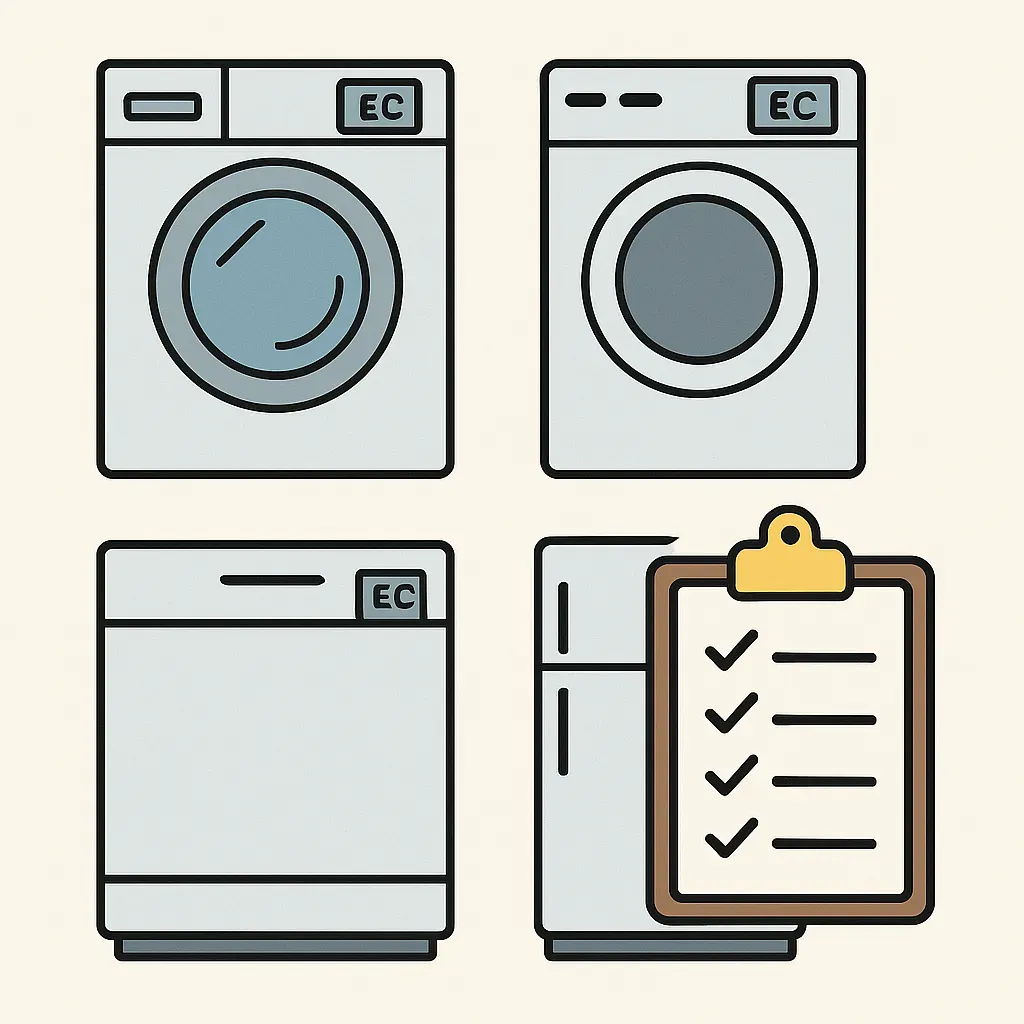
When a washer, dryer, refrigerator, dishwasher, or electric oven suddenly flashes an error code, it usually means the appliance has detected a problem and is trying to point you in the right direction. That does not always mean a major failure. Sometimes the issue is simple, like a power interruption, an airflow problem, a drain restriction, an unbalanced load, or a door that is not fully closing.
The key is to slow down, avoid guessing, and start with a safe process. This guide walks through what Beacon recommends first, what quick checks are usually safe at home, what warning signs mean it is time to stop, and when to schedule professional service with our friendly technicians in yellow.
Quick answer: Write down the exact code, take a photo of the display, try one safe reset, then do a few appliance-specific checks such as filters, airflow, hoses, water supply, temperature settings, or door closure. If the code returns, the appliance leaks, overheats, trips power, stops heating or cooling, or behaves erratically, it is time to have it diagnosed properly.
Start here — do not panic and do not guess at the code
Error codes are helpful, but only if they are captured correctly. A code that looks like “F0” might actually be “FO.” “5E” and “SE” can be confused on some displays. One wrong character can send you looking in the wrong direction.
- Write the code down exactly as shown.
- Take a clear photo of the display.
- Note what the appliance was doing when the code appeared.
- Write down any symptoms you noticed before the code, such as leaking, long cycle times, poor cooling, no heat, unusual noises, or repeated beeping.
That information helps narrow down whether the code points to a sensor problem, a communication issue, a drain problem, a fan issue, an airflow restriction, a control fault, or something more mechanical.
Try one safe reset
Many modern appliances will store a temporary fault after a voltage interruption, an incomplete cycle, or a momentary operating issue. A reset is worth trying once. Repeated resets are not a fix.
- Press Cancel, Clear, or Power if your appliance has that option.
- Turn power off at the breaker for about 5 minutes.
- Restore power and let the appliance fully reboot.
- For many electric ovens, set the clock before testing again.
- Run a simple test cycle only once.
If the error code comes back right away, that usually means the appliance is still seeing the same underlying fault. At that point, further restarting usually does not help and can sometimes make diagnosis harder.
What the code is usually trying to tell you
Most error codes fall into a few common categories:
- Water in or water out problems — common on washers and dishwashers when there is low fill, slow drain, a kinked hose, a blocked filter, or a pump issue.
- Airflow and heating problems — common on dryers when lint buildup, a crushed vent, or restricted outdoor airflow causes overheating or long dry times.
- Temperature or sensor problems — common on refrigerators and ovens when thermistors, sensors, or control boards are reading outside expected ranges.
- Door, latch, or switch issues — common when the appliance does not detect a fully closed or locked door.
- Communication or control faults — common after power disturbances or when one control cannot properly communicate with another.
That is why a code should be treated like a clue, not a final diagnosis. The code tells you where to start, but the actual failed part or operating condition still has to be confirmed.
Safe checks you can try by appliance type
Washers
Washer codes often relate to fill, drain, balance, door lock, or oversudsing issues. Before assuming a part has failed, check these basics:
- Confirm both hot and cold water valves are fully open.
- Make sure the inlet hoses are not kinked behind the machine.
- Check and clean inlet screens if accessible.
- Make sure the drain hose is not shoved too far into the standpipe.
- Rebalance the load if the machine stopped during spin.
- Use the correct amount of detergent and avoid excess suds.
- Check for standing water in the tub, which may point to a drain restriction.
If your washer repeatedly shows drain or balance related codes, that may signal a pump problem, a pressure sensing issue, a clogged drain path, or wear in the suspension system.
Dryers
Dryer codes are often caused by restricted airflow, overheating, moisture sensing problems, or power supply issues.
- Clean the lint screen completely.
- Check that the vent hose behind the dryer is not crushed.
- Verify the outside vent flap opens well during operation.
- Make sure the dryer is not packed too tightly with heavy items.
- On electric dryers, confirm the breaker is fully on and has not partially tripped.
Long dry times, repeated heat-related codes, or a hot cabinet often point to airflow restrictions that should be corrected promptly. If you are seeing those symptoms often, our dryer-related guides on the Beacon blog can help you narrow down the issue before service.
Dishwashers
Dishwasher codes often involve draining, filling, leak detection, wash motor issues, or door/latch faults.
- Clean the filter and remove debris from the sump area if safely accessible.
- Check that the drain hose is not kinked.
- Confirm the hose has a proper high loop or air gap where applicable.
- Look for water in the base pan if the model has leak protection.
- Make sure the door closes and latches properly.
If the unit hums but does not circulate, fills and stops, or keeps showing drain-related errors, the issue may be deeper than a simple clog.
Refrigerators
Refrigerator codes may point to temperature sensing, fan issues, ice maker faults, communication problems, or defrost-related issues.
- Set the refrigerator section to about 37 to 40°F and the freezer to about 0 to 5°F.
- Make sure food is not blocking interior air vents.
- Check door gaskets for gaps or poor sealing.
- Listen for evaporator or condenser fan noise changes.
- Look for heavy frost buildup on the back freezer panel.
Repeated temperature alarms, warming food, or frost buildup often mean the refrigerator needs more than a reset. Those cases may involve a sensor, fan motor, defrost issue, or control problem.
Electric ovens and ranges
Oven fault codes often involve temperature sensing, keypad issues, relay problems, or control faults.
- After resetting power, set the clock if required.
- Try a simple bake cycle at 350°F.
- Watch whether the code appears immediately, during preheat, or after reaching temperature.
- Stop using the oven if it overheats, will not regulate temperature, or throws a code again during preheat.
With electric cooking appliances, a recurring fault code usually means the sensor circuit, control, or related wiring needs proper testing.
What not to do
- Do not keep restarting the appliance over and over.
- Do not ignore burning smells, repeated breaker trips, or visible leaks.
- Do not force doors, latches, knobs, or panels.
- Do not run an oven self-clean cycle when it is already showing fault behavior.
- Do not take apart sealed components, controls, or wiring unless you are trained to test them safely.
A lot of service calls begin with a minor fault that turned into a larger one because the appliance was repeatedly run while struggling with drainage, overheating, airflow, or temperature control.
Signs the problem is likely more than a simple reset
Call for service when you notice any of the following:
- The code returns immediately after reset.
- The appliance will not start or finish a normal cycle.
- There is leaking, standing water, frost buildup, or warm food.
- The dryer is taking much longer than normal to dry.
- The oven overheats, underheats, or faults during preheat.
- The unit keeps rebooting, beeping, or acting unpredictably.
- The appliance trips the breaker or smells hot.
Those symptoms usually mean a sensor, fan, valve, latch, pump, control, or wiring issue still needs to be confirmed by testing.
What to have ready before you call Beacon
The more detail you can give us, the faster we can help narrow things down:
- Brand, model number, and serial number.
- The exact error code, ideally with a photo.
- What the appliance was doing when the code appeared.
- Any symptoms you noticed first, such as noise, heat, leaking, frost, or poor performance.
- Anything you already tried, such as a reset, filter cleaning, or hose check.
If you are not sure where to find the model tag, we can usually guide you once you call.
Why this matters in Florida homes
In Florida, heavy laundry loads, long cooling seasons, high humidity, and frequent appliance use can make small performance issues show up faster. Dryer vent restrictions, moisture-related door gasket issues, refrigerator airflow problems, and drain issues can all become more noticeable in busy households. That is one reason error codes are worth paying attention to early instead of waiting for a full breakdown.
Helpful next reads on Beacon
If you are still narrowing down the problem, these Beacon resources are a good next step:
- Browse our brand-specific appliance error code posts for more detailed code-by-code help.
- Visit the Beacon Help Center for additional appliance and AC troubleshooting articles.
- Learn more about Beacon appliance repair service if the code keeps returning.
Those pages can help you move from a general code checklist to appliance-specific troubleshooting.
When to call Beacon
If the appliance still shows the code after one reset and a few safe checks, it is time for a proper diagnosis. Beacon works on major electric appliances and can help determine whether the issue is something straightforward like a clogged filter path or something more involved like a failed sensor, motor, pump, fan, valve, latch, or control.
Our friendly technicians in yellow can confirm the actual cause, explain repair versus replacement when needed, and help you avoid buying parts based on a guess.
Request service online or call (352) 726-7530.
Content Update & Editorial Review
This article was reviewed and updated on March 7, 2026 by Chris from Beacon Services & Appliances to improve clarity, troubleshooting depth, FAQ coverage, and structured data accuracy.
Frequently Asked Questions
Does an appliance error code always mean a part has failed?
No. Sometimes the code is caused by a temporary interruption, airflow restriction, drain blockage, improper loading, or a door not closing fully. The code is a clue, not always a confirmed bad part.
How many times should I try resetting the appliance?
Usually once is enough. If the code returns after a proper reset, the appliance is still detecting the same fault. Repeated resets usually do not solve the underlying problem.
Can I still use the appliance if the code disappears after reset?
You can cautiously test one simple cycle, but if the code returns, performance is poor, or you notice leaking, overheating, odd noises, frost, or breaker trips, stop using it and have it checked.
What information should I give when scheduling service?
Have the brand, model number, serial number, exact code, and a short description of symptoms ready. A photo of the display is especially helpful.
Are drain and airflow codes usually serious?
They can be minor at first, but they should not be ignored. A restricted drain path, clogged filter system, or blocked dryer vent can lead to poor performance, repeat shutdowns, or additional component stress.
Where can I find more specific help for my brand and code?
A good next step is browsing our Beacon blog for brand-specific error code articles and visiting the Help Center for broader troubleshooting guides.
Local Help
Stuck with a stubborn code or not sure what it really means? Beacon can help confirm the cause and recommend the right next step.
Beacon Services & Appliances
(352) 726-7530 • www.BeaconSaves.com
📍 Contact Beacon Services & Appliances
📞 (352) 726-7530
🌐 www.BeaconSaves.com