
What Kind of Dryer Vent Is Safest for My Home?
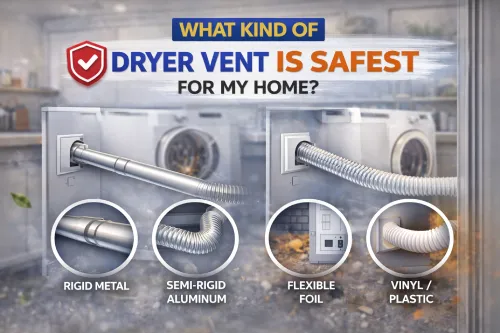
Q: I’ve seen all kinds of dryer vent hoses at the store—foil, plastic, metal. Which type is actually safest for my home?
A: For most homes, the safest and most reliable dryer vent setup uses rigid metal ducting for most of the run, with semi-rigid metal sometimes used for the short connector behind the dryer when needed. These materials handle heat better, resist crushing, and allow lint and moist air to move out more effectively. Thin foil and plastic-style hoses are more likely to kink, trap lint, and create safety problems.
A safe dryer vent is not only about the material. The length, number of turns, termination outside, and overall airflow also matter. A good vent system helps the dryer run more safely, dry faster, and collect less lint inside the duct.
For more guidance, visit the Dryer Vent Safety Help Center.
Rigid metal dryer vent, the safest standard option
Rigid metal dryer vent pipe, usually aluminum or galvanized steel, is widely considered the best overall choice for most of the vent run.
- Smooth interior walls that reduce lint buildup
- Strong airflow with less resistance
- Better resistance to heat and crushing
- More durable long-term than thin flexible materials
When the vent path allows it, rigid metal gives the best combination of safety and performance.
Semi-rigid metal dryer duct
Semi-rigid metal duct is often used for the short section between the dryer and the wall connection.
- More flexible than rigid pipe
- Still much safer than foil or plastic-style venting
- Helpful when the dryer needs to be pulled out for service or cleaning
This type of duct should still be kept as short and straight as possible. It is usually best as a connector, not the full vent run through the house.
Foil and plastic dryer hoses
These are common on store shelves, but they come with important drawbacks.
- They crush and kink easily behind the dryer
- Ribbed interiors can trap lint more quickly
- Plastic-style materials handle heat poorly
- They can create airflow problems that lead to longer dry times and more lint buildup
If your dryer is vented with one of these materials, it is worth having the setup evaluated.
Vent length, turns, and outside termination matter too
Safe dryer venting is not just about the duct material. Layout matters a lot.
- The vent should be as short and straight as practical
- Sharp bends and unnecessary turns should be minimized
- The vent should terminate outside with a proper hood
- The outside hood should open during operation and close when the dryer is off
Long runs, roof exits, vents through attics, or complicated paths often need closer attention and more frequent inspection.
Why safe venting matters so much
A properly designed dryer vent system helps by:
- Reducing lint buildup and fire risk
- Allowing faster, more consistent drying
- Reducing strain on the dryer
- Lowering extra heat and moisture problems around the laundry area
If a dryer takes too long to dry, runs hot, or leaves the laundry room humid, the vent system is one of the first things worth checking.
What you can safely check at home
- Look behind the dryer and see what type of duct is installed
- Check for obvious kinks, crushing, or sagging
- Make sure the dryer is not pushed so far back that it pinches the vent
- Confirm the outside vent hood is not blocked
- Pay attention to long dry times, excessive heat, or lint collecting around the dryer area
If you see foil, plastic-style venting, heavy crushing, or an unusually long and twisty run, it is a good idea to have it inspected.
When to call Beacon
If you are unsure what type of vent your dryer uses, or if you suspect it may not follow current best practices, our friendly technicians in yellow can inspect your dryer vent system and explain safer, more efficient options for your home.
You should call Beacon if:
- Your dryer uses foil or plastic-style venting
- The vent is crushed, kinked, or excessively long
- The dryer takes too long to dry clothes
- You notice excess heat, moisture, or lint around the dryer area
- You want help improving vent safety and airflow
More Dryer Vent Safety Help
For additional guidance, visit the Dryer Vent Safety Help Center or read: