
Why Does My Ice Taste Bad or Smell Strange?
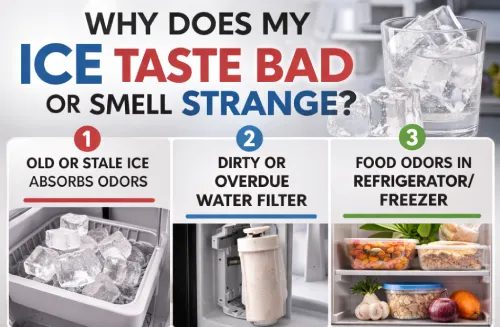
Q: My refrigerator makes ice, but the ice tastes bad or smells strange. What causes that?
A: Bad-smelling or bad-tasting ice is usually caused by old ice absorbing freezer odors, an overdue water filter, strong food smells inside the refrigerator or freezer, or mineral buildup inside the ice maker. Sometimes the issue starts inside the freezer. Other times it starts with the home’s water supply itself.
Below are the most common causes, what you can safely fix at home, and when it is time to call our friendly technicians in yellow.
1. Old or stale ice can absorb odors
Ice is porous and picks up smells easily. If cubes have been sitting in the bin for too long, they can start tasting stale or take on the smell of nearby foods.
Common signs:
- Musty or stale taste
- Ice smells like the freezer or nearby food
- Cloudy cubes or crumbly ice
Safe fix: Dump the entire bin and let the ice maker produce fresh ice for a day.
2. The water filter may be dirty or overdue
Most refrigerator water filters need regular replacement. When a filter is overdue, it may stop removing tastes and odors effectively.
An old filter can cause:
- Metallic or plasticky taste
- Sour, musty, or pond-like odor
- Off-flavor that comes back quickly after dumping the ice bin
Safe fix: Replace the filter, especially if it is older than about 6 months, then flush the water system according to the manufacturer’s instructions.
3. Food odors inside the refrigerator or freezer can transfer to ice
If the freezer smells, the ice usually will too. Ice absorbs odors very easily, especially when strong-smelling foods are not sealed well.
Common odor sources:
- Onions, garlic, and strong spices
- Seafood or raw meat packages
- Spilled juices or sticky residue
- Leftovers stored without airtight lids
Safe fix: Clean spills, throw away expired items, and store strong-smelling foods in airtight containers. An open box of baking soda can also help reduce odors.
4. Mineral buildup or residue inside the ice maker can affect taste
In areas with harder water, minerals can leave residue on ice maker parts and in the mold area. Over time, that buildup can affect both taste and smell.
Signs:
- White scale or chalky deposits
- Brown or rust-colored staining
- Bad taste even after replacing the filter
If the design allows safe cleaning access, a technician may recommend cleaning or replacing affected parts.
5. Household water quality can be part of the problem
If the water going into the refrigerator already tastes or smells off, the ice often will too. This can happen after plumbing work, seasonal water changes, or shifts in municipal or well water quality.
Quick comparison: Taste cold water from a nearby faucet and compare it with the dispenser water, if your refrigerator has one. If both taste bad, the issue may be upstream of the refrigerator.
6. The ice bin or ice path may need cleaning
Sometimes the water itself is fine, but residue or odor inside the bin, chute, or surrounding freezer surfaces keeps affecting the ice.
Possible clues:
- Fresh ice still smells odd right after being made
- The bin has residue, slime, or sticky spots
- The smell is strongest near the ice storage area
A careful cleaning of the removable bin and nearby surfaces can make a noticeable difference.
What you can safely do at home
- Dump all ice and let the bin refill with fresh cubes
- Replace the refrigerator water filter if it is older than about 6 months
- Flush the water dispenser or system after installing a new filter
- Wipe up spills and remove odorous or expired foods
- Store strong-smelling foods in airtight containers
- Clean the ice bin if it is removable and accessible
- Place an open box of baking soda in the freezer to help absorb odors
When to call Beacon
Call Beacon Services & Appliances if:
- The ice still tastes or smells bad after dumping the bin and replacing the filter
- You see residue, slime, or heavy mineral buildup near the ice maker area
- The refrigerator has normal water pressure but the taste or odor keeps returning
- The issue seems tied to the ice maker itself rather than the rest of the refrigerator
Our friendly technicians in yellow can help pinpoint whether the problem is the filter, water supply, freezer odor, or the ice maker assembly itself, and we will see how Beacon can help.