
Ice maker arm stuck?
Why is my ice maker arm stuck or not moving?
An ice maker arm that is stuck up, stuck down, frozen in place, or not moving is usually caused by an ice jam, frost buildup around the arm pivot, a bent or misaligned bail arm, or an ice maker that is not cycling properly. The bail arm, sometimes called the shutoff arm, is the part that helps the ice maker sense when the bin is full.
If the arm cannot move freely, the ice maker may stop making ice completely or keep trying to make ice when it should pause. Start by clearing the ice bin, checking for clumped ice around the arm, and looking for frost near the hinge or pivot area. Do not force the arm, because plastic pivots and ice maker parts can break easily.
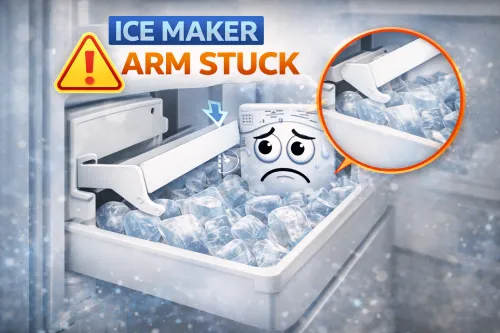
What to Check First
```1. Empty the ice bin
Dump the ice bin completely and remove clumped cubes. Ice wedged near the arm is one of the most common reasons the arm will not raise or lower correctly.
2. Check for frost buildup
Look around the arm hinge, pivot point, ice maker frame, and fill area. Frost can freeze the arm in place and keep it from moving normally.
3. Gently test the arm
With the bin clear, gently lift and lower the arm. It should move with light pressure. If it feels jammed, frozen, springy, or crooked, stop before forcing it.
4. Confirm the freezer is cold enough
Ice makers depend on proper freezer temperature. If the freezer is too warm, the ice maker may not cycle correctly and the arm may seem stuck. For broader refrigerator temperature issues, visit the Refrigerator Help Center.
Common Symptoms
- Ice maker arm is stuck in the up position
- Ice maker arm is stuck in the down position
- Ice maker arm will not lower
- Ice maker arm will not raise
- Ice maker arm feels frozen, jammed, or springy
- Ice maker stopped making ice after the bin filled or jammed
- Ice maker keeps trying to make ice and the bin overfills
- Ice maker has ice in the mold but does not harvest
Safety First: Homeowner-Safe Checks Only
- Do not force the ice maker arm up or down.
- Do not pry on the arm, hinge, or ice maker housing.
- Do not use sharp tools to chip ice around the arm.
- Do not take the ice maker apart unless the manufacturer specifically instructs you to do so.
- Stop and schedule service if the arm feels jammed, broken, loose, or frozen in place.
Ice Maker Arm Stuck: Symptom Guide
```| What You Notice | Possible Cause | What to Check |
|---|---|---|
| Arm is stuck up | Ice bin full, ice jam, frost around pivot, or bent arm | Empty the bin, clear clumps, and check for frost near the hinge or pivot. |
| Arm is stuck down | Arm not sensing full bin, damaged pivot, misalignment, or control issue | Check whether the arm moves freely and whether the bin is overfilling or jamming. |
| Arm will not move by hand | Frozen pivot, jammed ice, bent arm, or damaged ice maker housing | Do not force it. Clear visible ice and schedule service if it remains stuck. |
| No fresh ice after clearing the bin | Ice maker not cycling, freezer temperature issue, water-fill issue, or motor/control issue | Confirm the ice maker is on, the freezer is cold, and the bin is installed correctly. If it still will not produce ice, see Why Is My Ice Maker Not Making Ice? |
| Frost keeps returning around the arm | Warm air leak, door seal issue, airflow problem, or freezer frost issue | Check door closure, gasket condition, frost patterns, and whether food is blocking airflow. |
| Arm looks crooked or loose | Bent bail arm, damaged pivot, or ice maker assembly problem | Do not bend it aggressively. A damaged arm or assembly may need service. |
Safe Checks You Can Do
```- Dump the ice bin completely. Remove clumps, loose cubes, and any ice wedged near the arm.
- Reinstall the bin correctly. A bin that is not seated properly can interfere with normal ice maker operation.
- Gently move the arm. The arm should move with light pressure. Stop if it feels stuck, frozen, springy, or like it may break.
- Check for frost around the pivot. Frost near the hinge, arm pivot, or ice maker frame can lock the arm in place.
- Confirm the ice maker is turned on. Some models have an on/off switch or control setting in addition to the bail arm.
- Check freezer temperature. Most freezers should be near 0°F for proper ice production and harvest cycling. If the freezer is not staying cold, the issue may be part of a larger refrigerator problem.
- Look for bigger freezer frost patterns. Heavy frost elsewhere in the freezer may point to a door seal, airflow, or defrost-related issue.
Most Common Causes
```Ice Jam in the Bucket
Ice clumps can wedge near the bail arm and stop it from moving. This is one of the most common and simplest causes. If the arm moves normally after the bin is emptied and reinstalled, the issue may have been a simple ice jam.
Frost Buildup Around the Arm Pivot
Warm air entering the freezer can create condensation and frost around the arm hinge or pivot area. Over time, that frost can lock the arm in place. If frost keeps coming back, the stuck arm may be part of a bigger door-seal, airflow, or freezer frost problem.
Bent or Misaligned Bail Arm
The arm can get bumped during cleaning, bin removal, or rearranging food in the freezer. Even a small bend can make the arm rub, bind, or fail to seat correctly. Do not force the arm, because many pivots and housings can crack.
Ice Maker Not Cycling
If the ice maker motor or control module is not running a harvest cycle, the arm may not move even when the bin is empty. You may also notice no fresh ice, clicking noises, buzzing, stalling, or ice sitting in the mold without harvesting.
Freezer Temperature Problem
An ice maker depends on the freezer staying cold enough to complete a normal harvest cycle. If the freezer is drifting too warm, the ice maker may not cycle correctly and the arm may seem stuck or inactive.
Door Seal or Warm Air Leak
A freezer door that does not seal tightly can allow humid air into the freezer. That moisture can create frost, clumped ice, and repeated arm-sticking problems. If the frost pattern keeps returning, the issue may need refrigerator-side diagnosis instead of only ice maker troubleshooting.
Overpacked Freezer or Blocked Airflow
Food packed tightly around the ice maker area can interfere with airflow, bin seating, or arm movement. Make sure the ice maker area has enough clearance to operate normally.
```What Beacon Usually Checks
When our friendly technicians in yellow inspect an ice maker arm that is stuck or not moving, we look at both the arm itself and the freezer conditions around it.
```- Ice bin condition: clumped ice, wedged cubes, and bin seating
- Arm movement: whether the bail arm moves freely, binds, or feels damaged
- Frost patterns: frost around the pivot, fill area, frame, or freezer walls
- Freezer temperature: whether the freezer is cold enough for normal ice production
- Door seal clues: warm air leaks, poor gasket contact, or repeated frost buildup
- Ice maker cycling: whether the motor, harvest cycle, and control behavior appear normal
- Water-fill behavior: whether the ice maker is filling, freezing, and harvesting correctly. If water flow seems weak, a fill issue such as an LG refrigerator IE-style inlet problem may be part of the diagnosis.
When to Call Beacon
Call Beacon if the ice maker arm will not move after clearing the ice bin, if it feels frozen or jammed, if the arm looks bent or loose, or if the ice maker is not cycling at all. You should also schedule service if frost keeps forming around the arm or the freezer has cooling issues near the ice maker.
Beacon Services & Appliances helps homeowners in Beverly Hills, Inverness, Lecanto, Crystal River, Homosassa, Citrus Springs, Dunnellon, and nearby Citrus County communities with refrigerator repair and ice maker repair.
``` ```How to Help Prevent This Next Time
- Dump old or clumped ice occasionally so the bin does not jam around the arm.
- Make sure the ice bin is seated correctly after removing it.
- Keep food from pressing against the ice maker or arm area.
- Check the freezer door gasket if you see recurring frost buildup.
- Avoid leaving the freezer door open for long periods.
- Do not force the bail arm if it feels stuck or frozen.
Content Update & Editorial Review
This page was reviewed for clarity, homeowner safety, and practical ice maker troubleshooting guidance on March 15, 2026 by Chris at Beacon Services & Appliances.
We update appliance troubleshooting content regularly to reflect common repair issues we see in Citrus County homes and to keep recommendations practical, safe, and easy to follow.
Frequently Asked Questions
```What does the ice maker arm actually do?
The ice maker arm, also called the bail arm or shutoff arm, senses the ice level in the bin. When the bin fills, the arm lifts and tells the ice maker to pause production.
Is it bad if the ice maker arm is stuck up?
Yes. If the arm is stuck in the up position, the ice maker will usually stop making ice. Clearing clumped ice and checking for frost around the hinge often solves a simple jam.
Is it bad if the ice maker arm is stuck down?
If the arm stays down, the ice maker may keep trying to produce ice and overfill the bin. That can lead to jams, clumping, and repeated stalling.
Can I move the ice maker arm by hand?
You can gently lift and lower it to see if it moves freely, but do not force it. If it feels jammed or frozen, clear the ice bin and check for frost first.
Why is my ice maker arm frozen in place?
The arm may freeze in place if frost builds up around the hinge or pivot area. This can happen from clumped ice, warm air entering the freezer, a door seal issue, or airflow problems.
Why is my ice maker not making ice even though the arm is down?
If the arm is down but the ice maker is not producing ice, the issue may involve freezer temperature, water fill, the ice maker motor, the harvest cycle, or an internal control problem.
When does a stuck arm mean the ice maker needs replacement?
If the bin is clear and the arm still will not move, or the ice maker is not cycling at all, the internal motor or control module may be failing and the assembly may need service or replacement.
Can freezer frost problems make the arm stick again?
Yes. If frost keeps forming around the arm pivot or frame, the arm may keep freezing in place until the underlying air leak, door seal, airflow, or freezer issue is corrected.