
Refrigerator running longer than usual?
How do you clean refrigerator coils, and why does it matter?
Cleaning refrigerator coils can help your refrigerator run more efficiently, cool more consistently, and avoid unnecessary strain on the compressor. Dust, pet hair, and lint can build up on the coils over time, making it harder for the refrigerator to release heat.
When that heat cannot escape properly, the refrigerator may run longer, cool less consistently, use more energy, and put extra wear on important parts. If your refrigerator seems to run all the time, feels warm around the cabinet, or is struggling to keep food cold, dirty coils are one of the first homeowner-safe things to check.
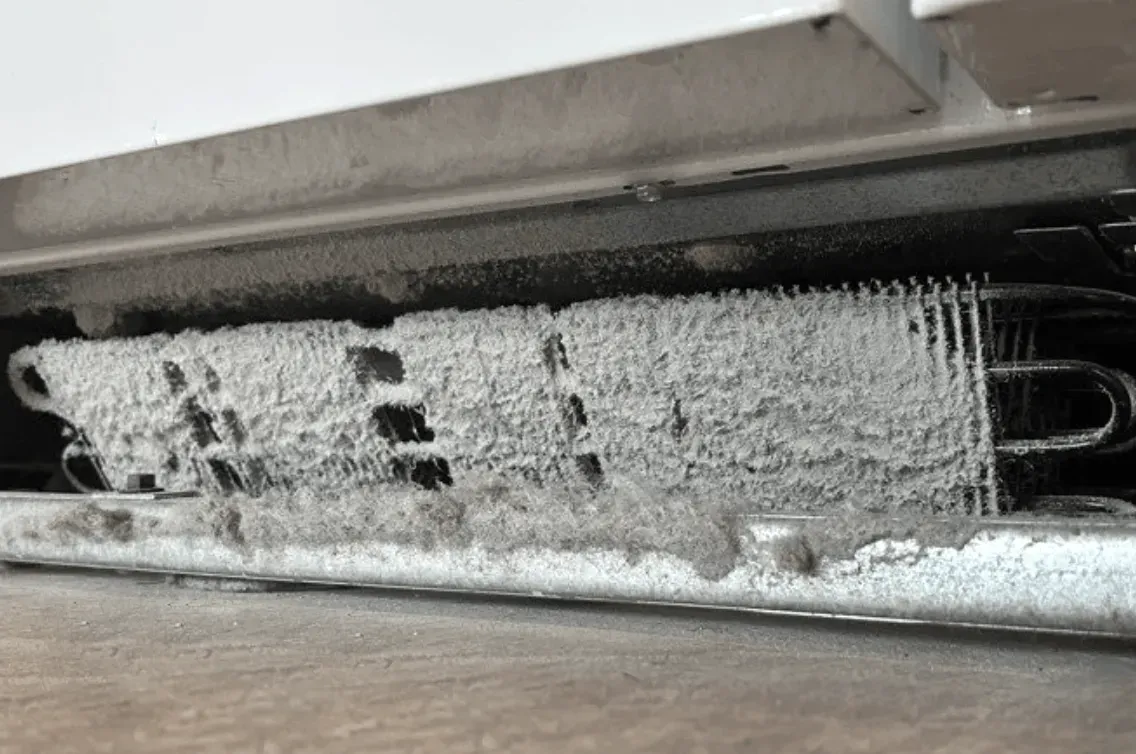
Common Symptoms of Dirty Refrigerator Coils
- The refrigerator runs longer than usual.
- The fresh-food compartment feels warmer than normal.
- The freezer performance seems weaker.
- The cabinet feels hot on the sides or near the compressor area.
- The refrigerator seems louder or more strained than usual.
- Your electric use increases without another obvious cause.
- Dust, lint, or pet hair is visible under or behind the unit.
Dirty coils are not the only reason a refrigerator may struggle, but they are a smart place to start. If cleaning the coils does not help, compare your symptoms with Why Is My Refrigerator Not Cooling? and Why Is My Refrigerator Running Constantly?.
```Why Dirty Refrigerator Coils Matter
Your refrigerator removes heat from inside the cabinet and releases that heat through the condenser system. When the condenser coils are covered with dust, lint, and pet hair, heat cannot escape as easily. That forces the system to work harder and longer to maintain the set temperature.
```Over time, dirty coils may contribute to:
- Reduced cooling performance
- Longer compressor run times
- Higher utility costs
- Warmer refrigerator or freezer temperatures
- Extra wear on the condenser fan motor
- Extra strain on the compressor
- More noticeable refrigerator noise
If temperatures are going up and down, see Why Is My Refrigerator Temperature Fluctuating?. If the main symptom is noise, see Why Is My Refrigerator Making Noise?.
```Safety First
Before cleaning refrigerator coils, unplug the refrigerator or switch off power if you can safely reach the plug. Be careful around sharp metal edges, floor trim, moving parts, and the condenser fan area.
```- Do not spray water into the machine compartment.
- Do not touch wiring, fan blades, or electrical components.
- Do not force panels, covers, or grilles that do not come off easily.
- Use care when moving the refrigerator so you do not damage flooring.
- Watch for copper tubing, water lines, and cords behind the refrigerator.
- Stop and schedule service if you smell burning, hear grinding, or see damaged wiring.
Where Are Refrigerator Coils Located?
The exact coil location depends on the refrigerator design. Some models have coils underneath behind the front toe-kick grille. Others have coils on the back of the cabinet. Built-in and specialty models may have different access points.
```Underneath the refrigerator
Many refrigerators have coils below the cabinet behind a lower front grille. Dust and pet hair often collect in this area.
Behind the refrigerator
Some models have coils on the back of the cabinet. These are usually easier to see once the refrigerator is carefully moved forward.
Near the compressor area
The condenser fan and compressor may be near the rear lower machine compartment. Use extra caution around this area.
Behind a grille or cover
If a cover does not come off easily, do not force it. Check the owner’s manual or schedule service if access is unclear.
How to Clean Refrigerator Coils
If the coils are safely accessible, this is a maintenance task many homeowners can do carefully with a coil brush and vacuum. Take your time and avoid damaging the coil fins, fan, wiring, or water line.
```- Turn off power. Unplug the refrigerator if the plug is safely accessible.
- Find the coils. Check behind the lower front grille or behind the refrigerator.
- Use a coil brush or soft brush. Gently loosen dust, lint, and hair from the coils.
- Vacuum the debris. Use a vacuum hose attachment to remove what you loosened.
- Clean the surrounding area. Vacuum under and behind the refrigerator too.
- Reinstall any grille or cover. Make sure everything is secure before restoring power.
- Slide the refrigerator back carefully. Avoid crushing the water line, pinching the cord, or kinking anything behind the unit.
- Restore power and monitor performance. Give the refrigerator time to stabilize and watch whether run time or temperature improves.
How Often Should Refrigerator Coils Be Cleaned?
A good rule is about every 6 to 12 months, but homes with pets, dust, or high traffic often need coil cleaning more often. If you have dogs or cats that shed heavily, checking every few months is usually a smart habit.
```You may need to check coils more often if:
- You have indoor pets.
- The refrigerator is near a laundry room, garage, or dusty area.
- The refrigerator sits close to the floor with limited airflow.
- You notice longer run times or warmer cabinet temperatures.
- You can see dust or pet hair under the front grille.
What Coil Cleaning Will Not Fix
Cleaning dirty coils can help if restricted heat transfer is the problem, but it will not fix every refrigerator cooling issue. If the refrigerator is still warm after the coils are clean, another part or system may need diagnosis.
```- A failed condenser fan motor
- A weak or failed evaporator fan
- A defrost system problem
- A bad thermistor or temperature control issue
- A door gasket that is not sealing properly
- An iced evaporator coil or blocked airflow path
- A sealed-system or compressor problem
If the refrigerator is leaking water, freezing food, or making a clicking sound, review Why Is My Refrigerator Leaking Water?, Why Is My Refrigerator Freezing Food?, and Why Is My Refrigerator Making a Clicking Sound?.
```What Beacon Usually Checks
If coil cleaning does not improve performance, our friendly technicians in yellow usually check a few other common causes of weak cooling, long run times, or warmer refrigerator temperatures.
```- Condenser fan operation: whether the fan is running and moving heat away properly
- Evaporator airflow: whether cold air is circulating through the freezer and refrigerator sections
- Evaporator coil condition: whether the coil is dirty, iced, or airflow-restricted
- Door gasket sealing: whether warm air is entering around the door
- Thermistor and control behavior: whether the refrigerator is reading temperature correctly
- Defrost system operation: whether frost buildup is blocking airflow
- Sealed-system clues: whether there are signs of compressor or refrigerant-side concerns
This helps determine whether the refrigerator simply needed maintenance or whether a repair is needed.
```When to Call Beacon
If you clean the coils and the refrigerator is still running hot, not cooling well, making unusual noises, or running constantly, it may be time for a professional diagnosis. Coil cleaning helps when restricted heat transfer is the problem, but it will not fix a failed fan motor, refrigerant problem, control issue, or compressor trouble.
Beacon Services & Appliances helps homeowners in Beverly Hills, Inverness, Lecanto, Crystal River, Homosassa, Citrus Springs, Dunnellon, and nearby Citrus County communities with refrigerator troubleshooting, cooling problems, noisy refrigerators, and appliance repair.
``` ```Prevent This Next Time
- Vacuum under and around the refrigerator regularly.
- Check for pet hair buildup more often if you have indoor pets.
- Leave proper clearance for airflow around the refrigerator.
- Make coil cleaning part of your home maintenance routine.
- Address long run times or weak cooling before the refrigerator is heavily strained.
- Schedule service if cleaning does not improve temperature or run-time problems.
Content Update & Editorial Review
This article was reviewed and updated on March 7, 2026 by Chris at Beacon Services & Appliances to help keep this guidance clear, accurate, and useful for homeowners.
We update appliance maintenance and troubleshooting content regularly to reflect common refrigerator issues we see in Citrus County homes.
Frequently Asked Questions
```What happens if refrigerator coils are dirty?
Dirty coils make it harder for the refrigerator to get rid of heat. That can lead to longer run times, warmer temperatures, higher energy use, and extra wear on the cooling system.
How often should I clean refrigerator coils?
Most homes should check and clean them about every 6 to 12 months. Homes with pets, heavy dust, or visible buildup may need more frequent cleaning.
Can dirty coils cause a refrigerator to stop cooling?
They can contribute to weak cooling or poor efficiency, but they are not the only cause. If cleaning does not help, another part or system may need to be checked.
Where are refrigerator coils located?
Many refrigerators have coils underneath behind a lower front grille. Others have them on the back of the cabinet, depending on the model.
Can I vacuum refrigerator coils myself?
Yes, in many cases this is a safe homeowner maintenance task if you unplug the unit first and use care around sharp edges, moving parts, wiring, and nearby components.
Will cleaning coils lower my electric bill?
It can help the refrigerator run more efficiently if dirty coils were causing longer run times. The amount of savings depends on how restricted the coils were and the overall condition of the appliance.